The word ‘theory’ can sound grand and intimidating, but a good theory can be very useful in simplifying something complicated and making it easier to understand.
In psychology, theories provide a framework to start making sense of complex behaviour. For me, a good theory is like a pathway being cut through an overgrown forest. It can give us a path to walk and a better sense of our direction of travel.
Getting my head around some of the key theories of suicide was so helpful for me at the start of my research work. I want to share insights from the theories I’ve found most useful in the hopes they may be illuminating for you too.
There are many disciplines required to study suicide fully – such as biology, sociology, and economics. As a psychologist I focus on psychological factors – the things we think, feel and do. As you read about the different theories, I encourage you to reflect on each theory and ask yourself:
Does this idea help me understand my pain better?
What does it help me explain about my own journey, challenges and areas for healing?
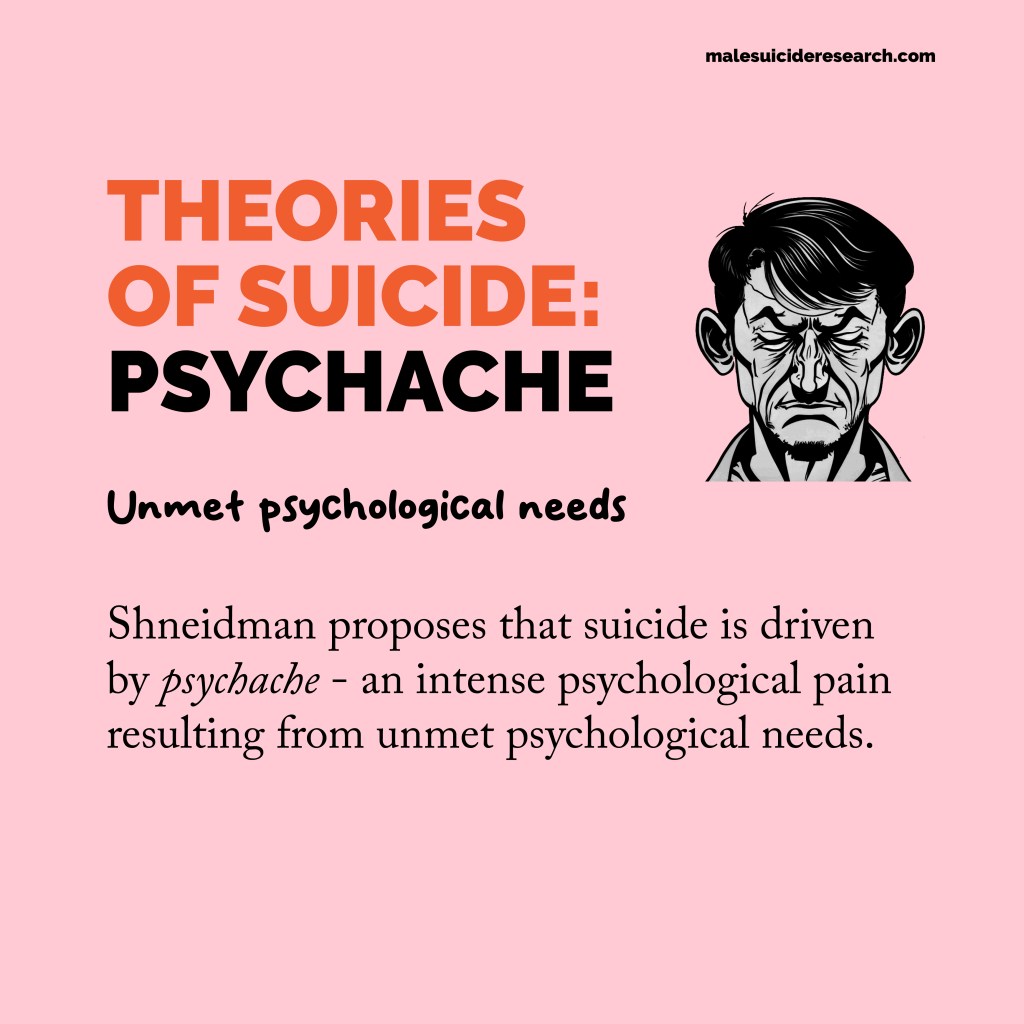
Each theory will explore different topics like unmet psychological needs, the human need to belong, difficult childhoods, feelings of hopelessness and painful feelings of self.
Not every theory will be helpful or relevant to your experiences. Sometimes, knowing what doesn’t connect with our pain, can bring us closer to understanding what does.
 malesuicideresearch.com